

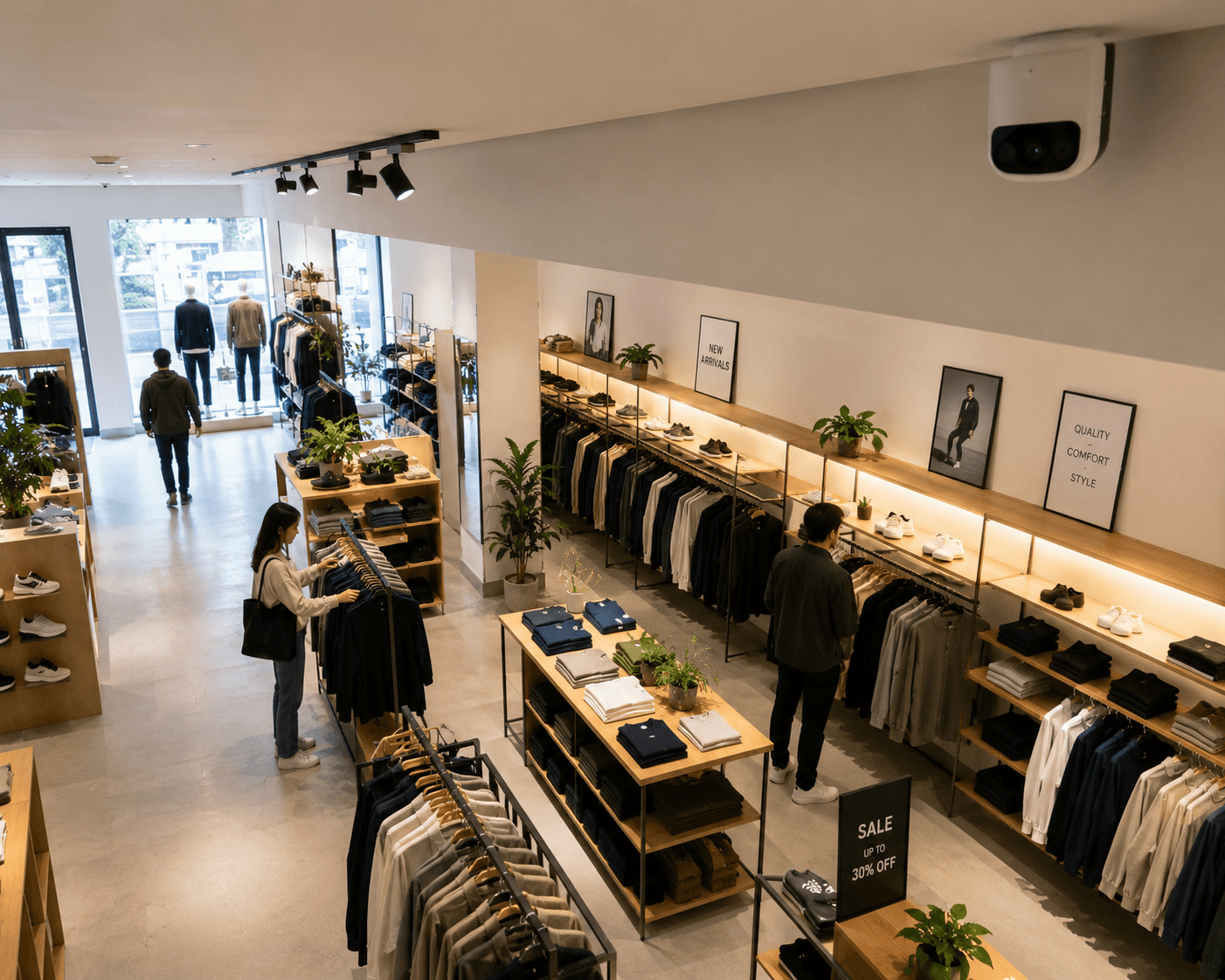
People counting and shelf sensors are helping retailers optimize layouts, staffing, and inventory in real time.
Retail teams make decisions about staffing, stock and store layout using a mix of point-of-sale records, observation and customer feedback. Transaction data explains what was purchased, while people-counting and selected in-store sensors may provide additional context about visits and movement through a space.
Where suitable counters and sensors are installed, footfall or dwell-time information can help teams compare activity across selected areas and time periods. The usefulness of the data depends on device placement, counting accuracy, privacy requirements and the way the business interprets the results.
Multi-branch operators may use a shared reporting view to compare stores, provided the measurement method is consistent between locations. Any staffing, layout or merchandising changes should be assessed against relevant operating data rather than assumed to produce a particular outcome.
Comparing entry counts with point-of-sale transactions can be one way to identify patterns that deserve further investigation. It is not, on its own, proof of theft or loss; teams should consider counting error, store layout, returns, staff entrances and other factors before drawing conclusions.
Retail monitoring should complement, not replace, existing POS and ERP tools. Integration options depend on the interfaces, data permissions and reporting needs of the systems already in use.