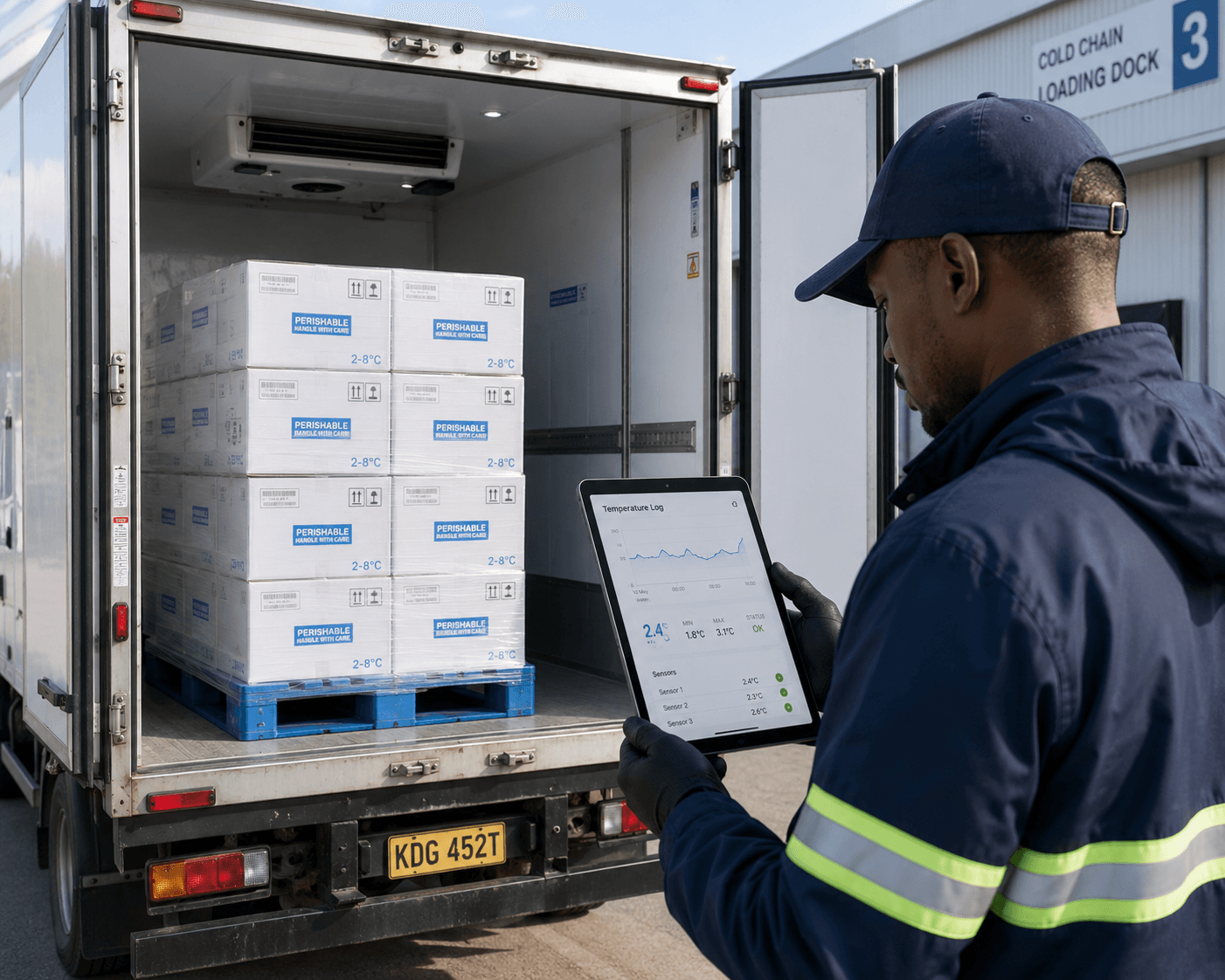

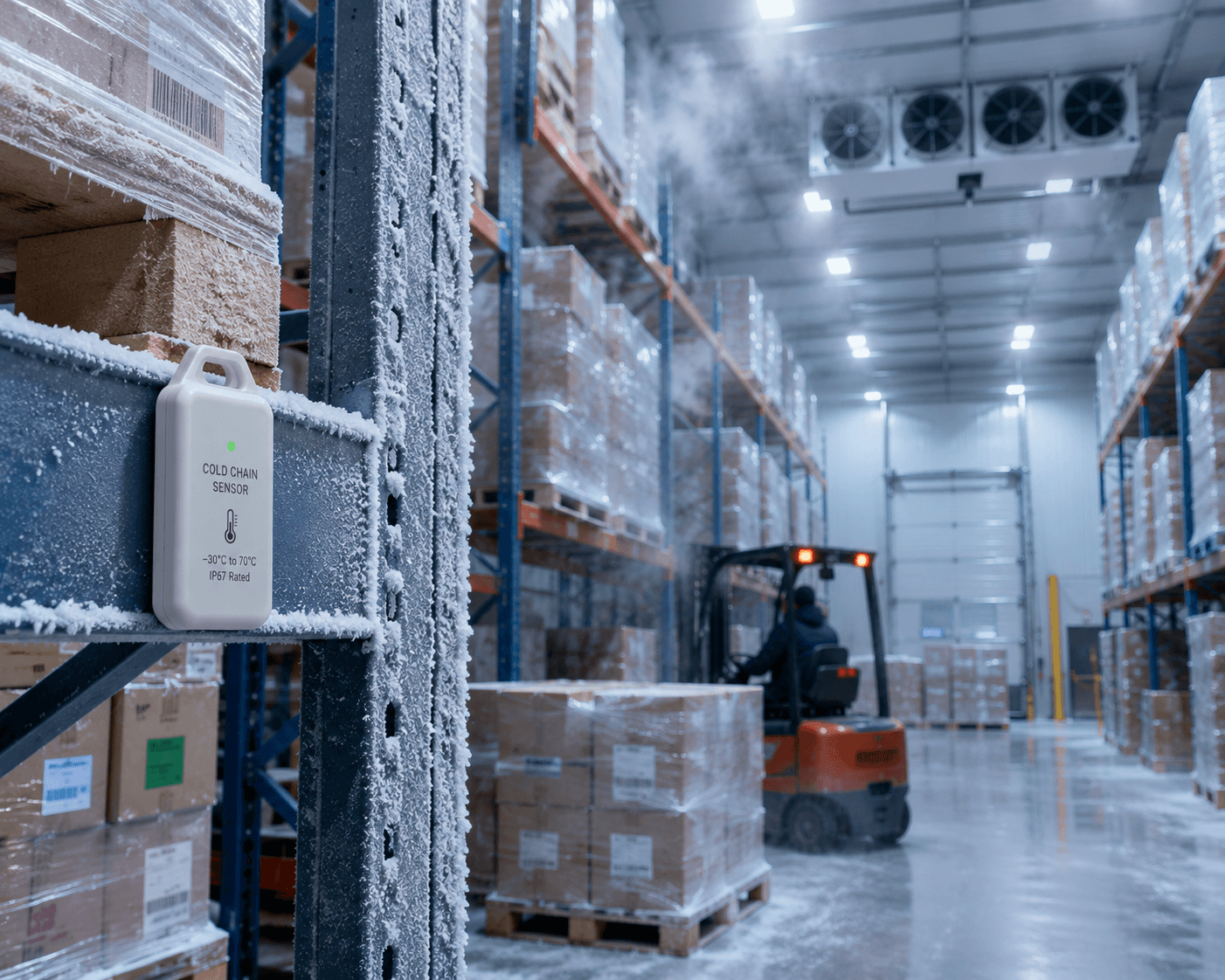
Temperature visibility through storage and transport.
A single temperature excursion can destroy thousands of doses of vaccine or millions of shillings of pharmaceutical product. AdvaIoT closes the monitoring gaps that cold chains have always had.
Project scope matters
The examples on this page describe possible applications. Final device selection, integrations, permissions, service arrangements and performance measures are confirmed against the site and project requirements before implementation.
What's broken in Healthcare & Cold Chain today
Africa's healthcare cold chain is under constant pressure. Power outages knock out cold rooms without triggering alerts. Refrigerated trucks break down and drivers don't realise the cargo temperature is rising until the ice has melted. Pharmacy cold rooms are checked manually twice a day — but the dangerous temperature excursion happens at 2 AM on a Sunday. Donors and regulators require audit trails that don't exist because the data was never captured.
The human cost extends beyond product losses. Expired or compromised vaccines are sometimes administered unknowingly, with no traceability to identify which batch was affected or which patients need follow-up. Import permits and export licenses for pharmaceutical products increasingly require certified continuous monitoring records that manual paper logs simply cannot provide.
AdvaIoT deploys calibrated temperature and humidity sensors in every critical point of the cold chain: cold rooms, refrigerated trucks, pharmacy cabinets, walk-in freezers, and last-mile insulated delivery boxes equipped with data loggers. Sensors report every 5 minutes, and any reading outside the configured safe range triggers immediate SMS, WhatsApp, and email alerts to the responsible team — regardless of the hour.
Every temperature reading is timestamped and tamper-evident. Regulatory export reports can be generated in a single click, showing the complete temperature history of any product batch from warehouse to delivery. Our sensors are battery-backed to continue monitoring through power outages, and backup alerts notify teams when mains power is lost.
Turning healthcare & cold chain data into decisions
- Continuous temperature and humidity logging across the cold chain
- Instant SMS and email breach notifications
- Audit-ready export for regulators and international partners
- Last-mile and warehouse coverage in one unified platform
Capabilities
These options can be evaluated against the operating environment, existing equipment, connectivity and project scope.
Continuous Temperature Monitoring
Calibrated sensors reporting every 5 minutes from cold rooms, reefer trucks, pharmacy cabinets, and laboratory freezers. WHO and KEBS-compliant monitoring intervals.
Instant Breach Alerts
SMS, WhatsApp, and email alerts sent within 60 seconds of a temperature excursion. Escalation chains ensure alerts reach backup contacts if primary contacts don't respond.
Audit-Ready Reports
One-click PDF and Excel temperature excursion reports for any date range, batch, or location. Formatted to meet NAFDAC, PPB, WHO PQ, and international cold chain audit requirements.
Reefer Vehicle Monitoring
Temperature sensors in refrigerated truck compartments with GPS tracking. Know the temperature and location of every vehicle simultaneously. Door-open alerts included.
Power Failure Detection
Sensors are battery-backed and continue monitoring through power outages. Mains power loss triggers instant alerts so teams can act before temperatures rise to dangerous levels.
Tamper-Evident Logging
All sensor readings are cryptographically timestamped and stored on secure cloud infrastructure. No reading can be altered retroactively — essential for regulatory and legal compliance.
Last-Mile Data Loggers
Single-use and reusable data loggers for final-mile delivery in insulated boxes. PDF reports generated on delivery confirming temperature maintained throughout transit.
Cold Chain Performance Analytics
Dashboard showing excursion frequency, duration, location, and root cause analysis across your entire cold chain. Identify your most vulnerable points and prioritise improvements.
Where connected systems can help
The examples below describe possible operating scenarios, not claims about a named customer deployment.
Vaccine Distribution Monitoring
Operational context
A county health department distributing routine immunisation vaccines across 40 health facilities had experienced three cold chain failures in 12 months, resulting in vaccine wastage and uncertainty about administered doses. Manual temperature logbooks were unreliable and often incomplete.
Pharmaceutical Import Compliance
Operational context
A pharmaceutical importer bringing temperature-sensitive products through JKIA needed to provide continuous temperature records from manufacturer to pharmacy as a condition of their import permit. Manual data loggers were frequently lost and reports took days to compile.
Hospital Blood Bank Monitoring
Operational context
A referral hospital blood bank relied on manual temperature checks four times daily. A weekend compressor failure that began Friday evening wasn't discovered until Monday morning, resulting in the loss of an entire blood stock worth over 800,000 KES.
How we deploy
Cold Chain Mapping
We document every cold chain location — cold rooms, vehicles, pharmacies, and delivery routes — and identify monitoring gaps. Sensor placement is designed to capture the most critical points.
Sensor Installation
Calibrated sensors and data loggers are installed by trained technicians. All sensors are provided with KEBS calibration certificates. Installation is non-invasive and takes under 2 hours per facility.
Alert Configuration
Alert thresholds, escalation chains, and reporting schedules are configured to your cold chain specifications — WHO 2–8°C for vaccines, -15°C to -25°C for frozen biologicals, etc.
Ongoing Compliance Support
Sensors are re-calibrated annually. Regulatory report templates are updated as requirements change. Our team supports cold chain audits and provides expert testimony if required.